Your attorney and the trustee drive this
When a bankruptcy is filed, the house generally becomes part of the bankruptcy estate, and a trustee is appointed. Selling estate property usually requires the trustee's involvement and often court approval.
So the first call is your bankruptcy attorney, and the second is also your bankruptcy attorney. We are a buyer. We do not advise on the bankruptcy, we do not talk to your trustee on your behalf, and we would be suspicious of any buyer who offered to.
Which chapter you are in changes the answer
The two chapters put a house in quite different positions, and general advice about "selling in bankruptcy" is close to useless without knowing which one applies.
We are not going to summarize bankruptcy law on a page selling houses. Your attorney will tell you where your particular filing leaves the property, what exemptions apply, and whether a sale helps or hurts the plan. Ask that question specifically, because the answer determines whether the rest of this page is relevant to you at all.
The Coram market underneath this
Prices are up 23.26% year over year as of 2026-05, which sounds like unambiguous good news and mostly is. What it hides is that a rising median is driven by renovated stock. A house that needs work does not ride that wave - it gets compared to the finished one down the street and marked down against it. At a $575,000 median, Coram is a market where buyers expect to do some work. That helps a seller with a dated house and hurts one with a genuinely broken one, because the pool that will take on a project is not the same pool that will take on a gut. The median house here goes under contract in about 38 days, which is quick for Long Island. It is also a figure that only applies to property in showable condition.
A four-bedroom on Judith Drive. A three-bedroom on Winside Lane. An one-bedroom on Skyline Drive. All of them in Coram, all bought by us.
Why cash suits a Coram court timeline
Court-approved sales run on the court's schedule, and a financed buyer is a poor fit for that. Rate locks expire, approvals go stale, and a buyer who has waited two months for a hearing frequently walks.
We are not borrowing, so there is nothing on our side that expires. We can wait for a date, and we can hold a number while the process runs. On top of that there is no appraisal contingency and no financing contingency, which removes the two most common reasons an approved sale still falls apart afterward.
The condition of the Coram house does not matter to us
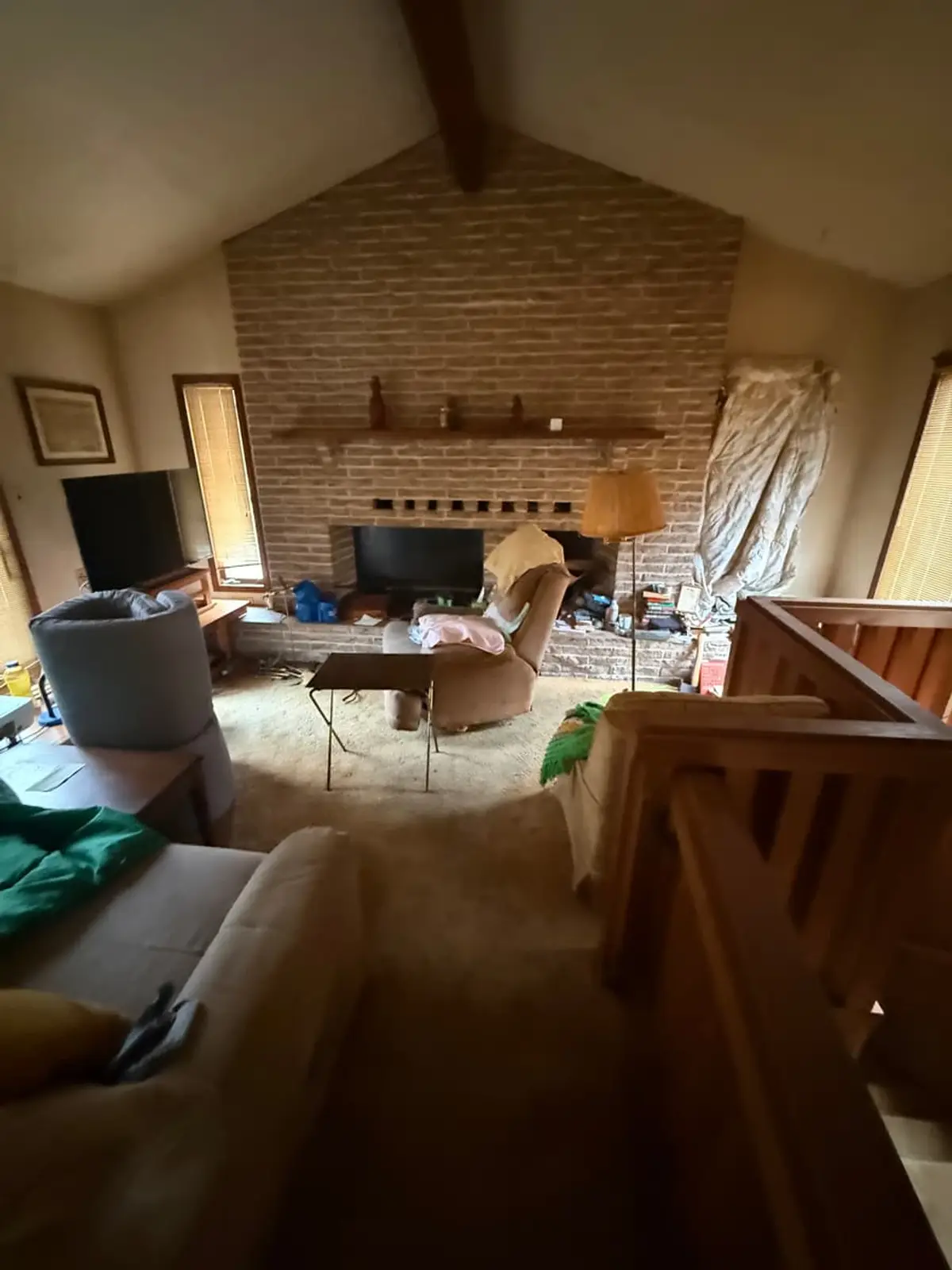
Deferred maintenance is the norm in this situation rather than the exception, and we price Coram houses in that condition every week. Whatever has been put off, say so at the start.
The reason to be upfront is not politeness. A number that changes after the trustee has seen it is a much bigger problem in a court-supervised sale than in a private one, and the way to avoid that is to price the house accurately the first time.
What you do not pay when you sell a house in bankruptcy
Every line below is a cost of listing a house in bankruptcy the retail way that simply does not arise here.
- Agent commission
- $28,750 at 5% of the Coram median none
- Seller closing costs
- About $11,500 on a $575,000 sale. We can cover these. none
- Repairs to make it listable
- The work it needs to show well, out of your pocket first none
- Cleanout and removal
- Charged by the truckload, and done before the first showing none
- Carrying costs while it waits
- Taxes, insurance and utilities while you spend 83 to 98 days finding a buyer and waiting for their loan none
What to bring your attorney
Your attorney will do the legal work. What slows these sales down is usually missing paperwork, and most of it is easy to gather early.
A current mortgage payoff statement from your servicer, the latest property tax bill, the deed if you have it, and our written offer with proof of funds. With those in hand your attorney can tell you quickly whether a sale fits your filing, and the trustee has what they need to look at a specific Coram transaction rather than a hypothetical one.
How selling a house in bankruptcy in Coram works
- 1
You tell us about the house
An address in 11727 and a rough idea of condition. Two minutes on the phone or the form. We do not need photographs, a clean house, or anything fixed first.
- 2
One short visit
One of us comes by once, usually for less than half an hour. On a hi-ranch or ranch like most of Coram, what we look at closely is the roof, the boiler and the wiring, not the finishes.
- 3
We put a figure in writing
You have a written number within 24 hours, a single figure rather than a "somewhere around". Feel free to check it with a Suffolk County agent. When a house is ready to list as it is, listing can beat us, and we would rather you knew.
- 4
You choose when to close
Soon, or months away if probate, a tenant or your next move has to come first. You also avoid the 83 to 98 days a listed Coram house typically takes to find a buyer and get through the buyer's mortgage.
When the Coram house is behind on payments too
Many people file for bankruptcy with the mortgage already behind, and some file with a foreclosure already started. The filing can change where that foreclosure stands, and your attorney will tell you exactly where yours is.
What matters for a sale is that the arrears, the mortgage and any fees all come off the proceeds at closing, like any other payoff. If there is equity in a Coram house, a sale approved inside the bankruptcy can protect more of it than letting a foreclosure finish.
Common questions
Can I sell my house while in bankruptcy?
It is often possible. What makes it different from an ordinary sale is that the house usually sits in the bankruptcy estate, so the trustee is involved and a judge may need to sign off. Your bankruptcy attorney decides whether and how, and should see any paperwork first.
Do you deal with the trustee for me?
We do not, and you should be wary of a buyer who says they will. The trustee and the court are your attorney's to manage. Our part is a firm written number, proof of funds, paperwork on request, and a closing on the approved date.
Will you wait for court approval?
Yes, and it does not cost us anything to do so. Waiting is a problem for buyers whose mortgage approval can expire; we have no mortgage approval to lose.
Does the condition of the house matter?
No. We buy as-is, and repairs that were put off are expected here. Just as important, the number we give is the number we close at. A court-approved figure that a buyer then tries to reduce is a problem nobody needs.