The deadline is the whole problem
Two waits sit inside a listed sale and a relocation has room for neither. First the wait for a buyer, then the wait on that buyer's mortgage.
In Coram that is about 38 days to a signed contract on a house that was already showable, then another month or two on underwriting. If your start date is inside that window, listing is not really a plan, it is a hope with a moving date attached.
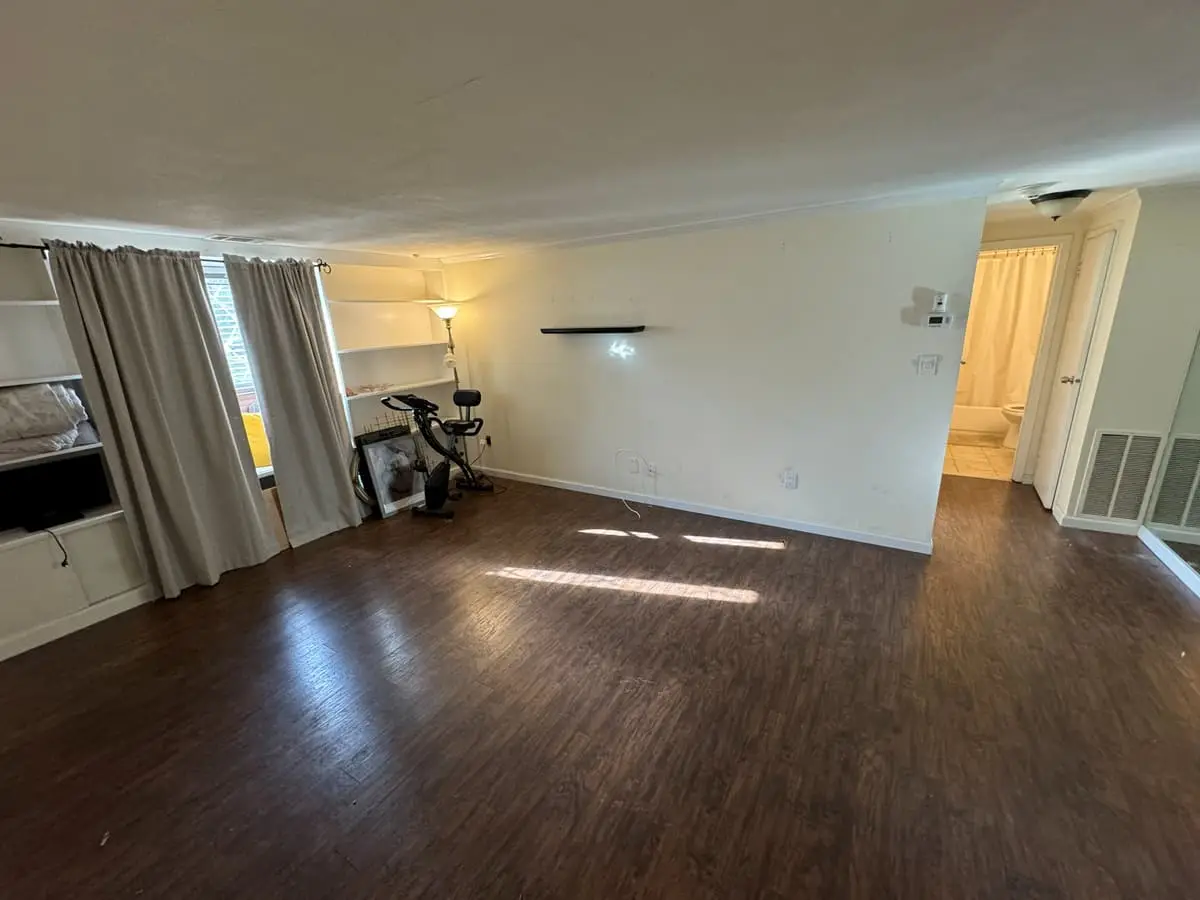
Keeping the Coram house after the job relocation
Plenty of people relocate and list the old house from a distance. It works, and it costs more than the spreadsheet says.
You are paying the mortgage, the taxes, the insurance at a vacant rate, and the heat through a Long Island winter to keep the pipes intact. Add a service to cut the grass and somebody to check the place, because an obviously empty house on a Coram street is noticed. Then add the price reductions that come with a listing nobody is there to manage, because you relocated four states away.
What this looks like in Coram specifically
Coram is roughly 40,220 people in Suffolk County, ZIP 11727, and the housing stock is mostly hi-ranch, ranch, colonial. Around Route 112 and Middle Country Road, most of it is old enough that the mechanicals are on their second or third life. We know which of these streets take water, where the older systems fail first, and what the Longwood and Middle Country school district does to a resale price.
Prices are up 23.26% year over year as of 2026-05, which sounds like unambiguous good news and mostly is. What it hides is that a rising median is driven by renovated stock. A house that needs work does not ride that wave - it gets compared to the finished one down the street and marked down against it. At a $575,000 median, Coram is a market where buyers expect to do some work. That helps a seller with a dated house and hurts one with a genuinely broken one, because the pool that will take on a project is not the same pool that will take on a gut. The median house here goes under contract in about 38 days, which is quick for Long Island. It is also a figure that only applies to property in showable condition.
Matching the closing date to your relocation
The relocation date goes in the contract and we work to it. If you need to close the week before you fly, that is the date. If you would rather close after you have started and come back once, that works too.
What we do not do is make the date conditional on a lender, an appraisal or an inspection, because none of those are in the transaction. That is the entire reason a cash sale suits a relocation: the one thing you cannot flex is the one thing we can fix in writing.
When you should list it instead
If the house is in showable condition, a bank will lend against it, and your relocation date is far enough out to absorb about 38 days plus a lender's underwriting, list it. Competition between financed buyers will beat what any single cash buyer pays, and the employer relocation package sometimes covers the carrying costs while it runs.
We will tell you when that is your relocation. It is a meaningful share of these calls, and saying so costs us a deal we should not have had.
How selling a house during a job relocation in Coram works
- 1
You give us the address
The street address in 11727 and a sentence or two about the condition, by phone or the form. No photos needed, and nothing has to be cleaned or repaired first.
- 2
We come and look at it
One visit, one person, usually under half an hour. On a hi-ranch or ranch of the age most of Coram was built, we are mainly looking at the roof, the boiler and the electric rather than the kitchen.
- 3
You see the number
Within a day you get our offer as one written figure. Get a Suffolk County agent's opinion alongside it if that helps. For a house that could go on the market as it stands, listing may come out ahead, and we will tell you if so.
- 4
Closing happens on your date
If you need it done quickly, it can be. If probate, a tenant or a move means waiting, we wait. What you skip is the 83 to 98 days a Coram listing usually spends on finding a buyer and then on that buyer's lender.
Selling the Coram house after you have already relocated
A lot of relocation sales happen after the move, and the process barely changes. We need one visit to the house, which a neighbor, a relative or a lockbox can cover. Everything after that is phone, email and signatures.
Your attorney handles the closing, and you do not need to fly back for it. Leave the keys where we agree, leave whatever did not make the moving truck, and the Coram house stops being something you manage from four states away.
How we arrive at a number on a house during a job relocation
For a house during a job relocation, the starting point is the price once it is fully repaired. We subtract what the repairs cost and then a margin for being wrong about the price or the repairs. No algorithm and no trade secret: that is how the number is built.
- What it is worth repaired. Not the Coram median of $575,000 on its own, but what houses like yours on your street actually closed at recently.
- What the work costs. Roof, boiler, electric, the kitchen and bath. In Coram the stock is largely hi-ranch and ranch, and on houses that age the mechanicals are usually the expensive part rather than the cosmetics.
- How long we will hold it. The median Coram house goes under contract in about 38 days once it is showable, then waits 45 to 60 days more on the buyer's lender. Ours has to get to showable first, and we carry taxes and insurance across the whole of it.
- What we are wrong about. Every renovation turns up something nobody could see on the walk-through. We build that risk into the price, and it explains a good part of why cash offers come in below retail.
Where our margin actually comes from
Plainly, because buyers are often vague here: we run millions of dollars of construction a year. At that volume we pay contractor prices for materials and keep steady crews working twelve months a year, so a given renovation costs us roughly half of what a homeowner pays for the same job.
That is where our margin is. It is also why fixing the house up yourself first rarely pays off. You would be paying retail for the work and counting on the sale price to cover it, and it usually does not. We earn our money on the construction side, not on the price we pay you.
If the figure does not work, say so; we would rather know than try to talk you round. We will look at what is going on and tell you honestly which options make sense, including the ones without us. Listing with an agent is the better route for plenty of sellers, and we will tell you if it is yours.
Fixing up a Coram house against a relocation deadline
A relocation is the worst time to start a renovation. Contractors run late, you are packing, and every week of work is a week the house is not on the market and you are paying for two homes.
Selling as-is removes the list entirely. What is worth knowing is which items a financed buyer's lender would actually insist on, because those decide whether listing is realistic before your start date. We will walk the house and tell you which is which, even if the answer is that you should list it.
Common questions
Can you close before my relocation date?
That is the normal reason people in a relocation call us. Tell us the date you need and we will tell you plainly whether it is workable before you commit to anything.
Do I have to be in town for the closing once I have relocated?
No. Your attorney can handle it once you have moved, and doing it that way is common enough to be unremarkable. Ask your attorney how they prefer to manage it.
What do I do with everything the relocation is not shipping?
Leave it. Furniture, the contents of the garage, whatever did not make the truck. The cleanout is ours after closing and it does not change the number.
Should I rent the Coram house out instead of selling before the relocation?
Sometimes that is the better answer, particularly if the mortgage is low and the house is in good shape. Be honest with yourself about managing a Coram rental from another state, though, including the tenant who stops paying in your second year. We buy a lot of houses from long-distance landlords who started exactly this way.