Not every crack is a foundation problem
Almost every older house has cracks somewhere, and most of them are the house settling into its own weight over decades. Thin vertical cracks, a stoop pulling away, a floor that runs slightly downhill toward one corner.
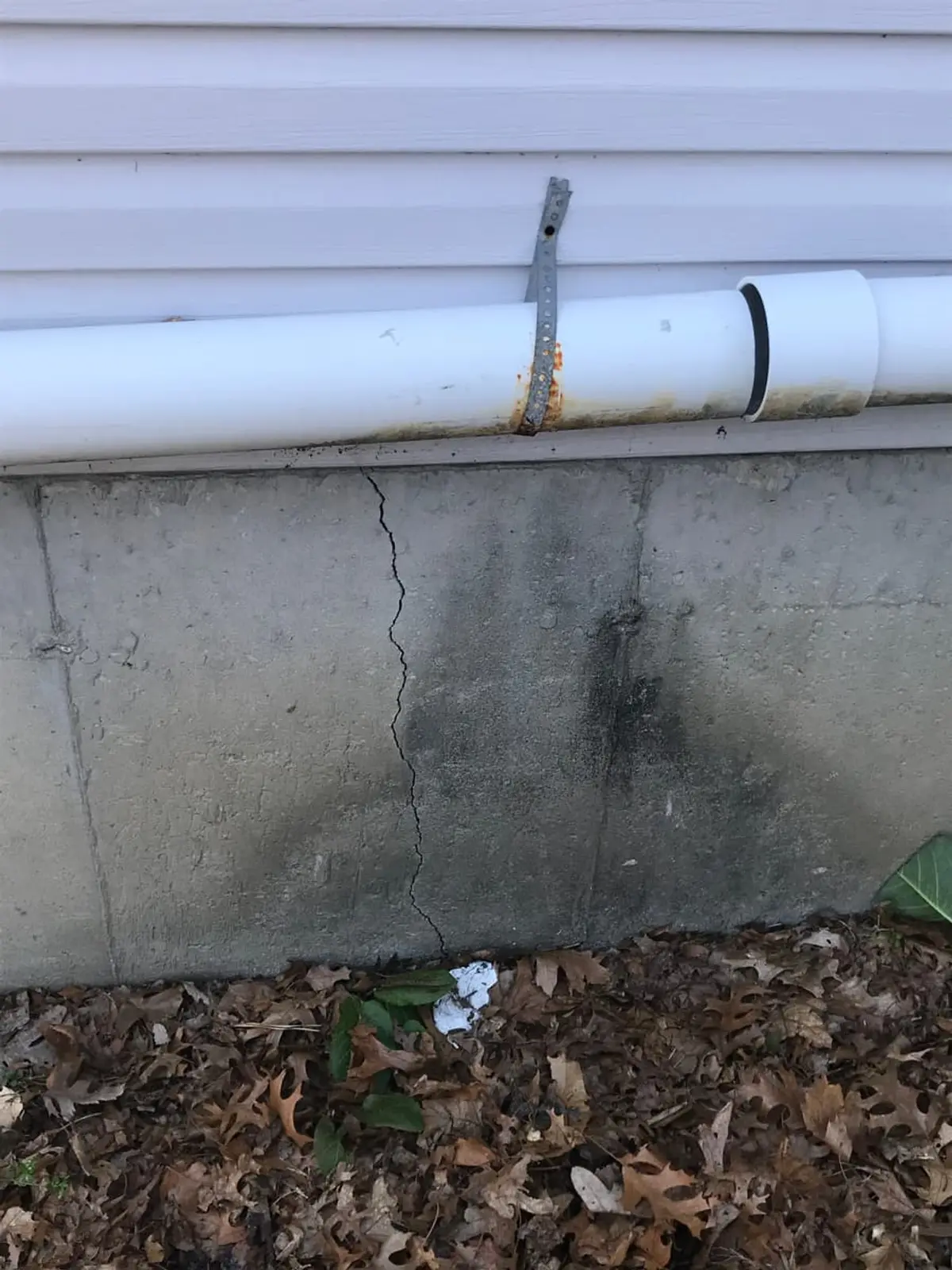
The ones that matter look different. Horizontal cracking, a wall bowing inward, stair-step separation through block, doors across the whole house that have started to bind. That pattern suggests movement still underway, which is the line between a cosmetic note and a foundation repair somebody has to pay for.
What we bring to a foundation problem, beyond the money
Structural work is one of the few repairs where the right contractor matters more than the price, because the wrong fix gets paid for twice.
We have used the same engineers and the same crews across Nassau and Suffolk for years, and we are glad to put you in touch with them. If you would rather understand the foundation before you decide anything at all, start there. We will still be here afterward, and our offer on your Coram house does not depend on you deciding quickly.
The Coram market underneath this
Prices are up 23.26% year over year as of 2026-05, which sounds like unambiguous good news and mostly is. What it hides is that a rising median is driven by renovated stock. A house that needs work does not ride that wave - it gets compared to the finished one down the street and marked down against it. At a $575,000 median, Coram is a market where buyers expect to do some work. That helps a seller with a dated house and hurts one with a genuinely broken one, because the pool that will take on a project is not the same pool that will take on a gut. The median house here goes under contract in about 38 days, which is quick for Long Island. It is also a figure that only applies to property in showable condition.
A four-bedroom on Judith Drive. A three-bedroom on Winside Lane. An one-bedroom on Skyline Drive. All of them in Coram, all bought by us.
Appraisals, underwriting and foundation findings
The reason a cash buyer matters here is not really speed. It is that nobody else is grading the house.
Some loan programs are stricter than others about structural condition, and the buyer stretching hardest to afford the place is usually the one whose lender looks hardest. We do not answer to one. Foundation problems or none, the closing date is yours to choose, and our number does not wait on somebody in an underwriting department forming an opinion about your basement.
We bring our own foundation opinion
Do not spend money on a structural engineer on our account. If a report is needed, we order it and we pay for it.
Sellers often assume they have to arrive with documentation before anyone will take them seriously. You do not. Tell us what you can see, let us look once, and if the foundation warrants an engineer we will bring one out ourselves. If you already have a report from a sale that fell apart, show us and it saves everyone a step.
How we arrive at a number on a house with foundation problems
The honest answer on a house with foundation problems is that we work backwards from what it is worth once it is fixed, subtract what fixing it costs, and subtract what we need to make for the risk of being wrong about either. There is no secret to it and no algorithm.
- What it is worth repaired. Not the Coram median of $575,000 on its own, but what houses like yours on your street actually closed at recently.
- What the work costs. Roof, boiler, electric, the kitchen and bath. In Coram the stock is largely hi-ranch and ranch, and on houses that age the mechanicals are usually the expensive part rather than the cosmetics.
- How long we will hold it. The median Coram house goes under contract in about 38 days once it is showable, then waits 45 to 60 days more on the buyer's lender. Ours has to get to showable first, and we carry taxes and insurance across the whole of it.
- What we are wrong about. Opening a wall finds things. That risk is priced in, which is a large part of why a cash number sits below a retail number.
Why the number works for us and not for you
This is the part most cash buyers are vague about, so here it is plainly. We run millions of dollars of construction a year. That volume buys materials at contractor pricing and keeps the same crews working year round, which means the identical renovation costs us roughly half what a homeowner would pay to have it done.
That gap is the business. It is also why doing the work yourself before selling so rarely pays: you would be buying the same roof and the same boiler at retail, then hoping the market hands it back to you at resale. It usually does not. We are not making money because you sold cheaply. We are making it because we build cheaply.
And if the number does not work for you, say so. We would rather hear that than talk anyone into anything. We will look at your situation and tell you honestly what we think your options are, including the ones that do not involve us. Plenty of people are better off listing with an agent, and when you are one of them we will say so rather than let you find out later.
Why listed sales fail on foundation findings
Two things have to survive for a listed sale to close: the buyer's nerve and the buyer's lender. A foundation finding tends to take out both.
The buyer reads a report full of phrases like differential settlement and lateral movement and cannot tell whether it means a weekend of work or a catastrophe. The lender starts asking for engineering documentation. Either one alone ends the contract, and the house goes back on the market in Coram looking staler than it did before.
How selling a house with foundation problems in Coram works
- 1
Start with the basics
Where the house is (11727) and a rough sense of its condition is all we need to begin. Call or use the form. Nothing needs fixing or clearing out beforehand.
- 2
We walk through it once
A single visit by one person, normally under thirty minutes. With a hi-ranch or ranch built when most of Coram was, the roof, heating and electric matter far more to us than the kitchen does.
- 3
You see the number
Within a day you get our offer as one written figure. Get a Suffolk County agent's opinion alongside it if that helps. For a house that could go on the market as it stands, listing may come out ahead, and we will tell you if so.
- 4
Closing happens on your date
If you need it done quickly, it can be. If probate, a tenant or a move means waiting, we wait. What you skip is the 83 to 98 days a Coram listing usually spends on finding a buyer and then on that buyer's lender.
What to do next
A great many houses here went up in the postwar decades and the footings reflect it. Block walls, shallow crawl spaces, slabs poured over fill, and additions built later on footings that were never tied into the original.
That last one accounts for a fair share of what gets called a foundation problem. A rear extension settles at its own rate, the joint between old and new opens up, and the inside of the house tells on it through cracked ceilings and a door that will not latch.
Common questions
Do I need a foundation engineer's report before you will look at a Coram house?
No. If a report on the foundation is needed, we order it and pay for it ourselves. Bring whatever you already have, including anything from a sale that fell through, and we will work from that.
Is the crack in my basement settlement or a foundation problem?
That is not a question to settle from a photograph alone. What we can do is walk it with you, say plainly which category it looks like, and bring an engineer in if the answer matters to what you decide next.
A buyer's lender killed our last Coram sale over the foundation. Can you still buy?
Yes. A financed sale falling apart tells us about the lender, not about your house. We can pick the Coram purchase up from wherever the last one collapsed.
Will foundation problems ruin my offer price?
They affect the number the way any real repair does, because the work has a genuine cost. What they do not do is end the conversation. We would rather price the foundation accurately once than be vague now and revise on you later.
Should I repair the foundation before selling my Coram house?
Sometimes that genuinely is the better route, and we will say so if we think it. The risk is paying for the work, then having a fresh inspection turn up something else and losing the buyer regardless.