The unpermitted work nobody thought to file for
Long Island housing stock has been extended, finished and converted for generations, and permits were not always the habit. A good share of the square footage people live in today was added quietly over a few weekends.
That is why this comes up so often at the closing table. The house you have been living in and the house on file at the town are two different houses, and the gap between them is what unpermitted work actually means.
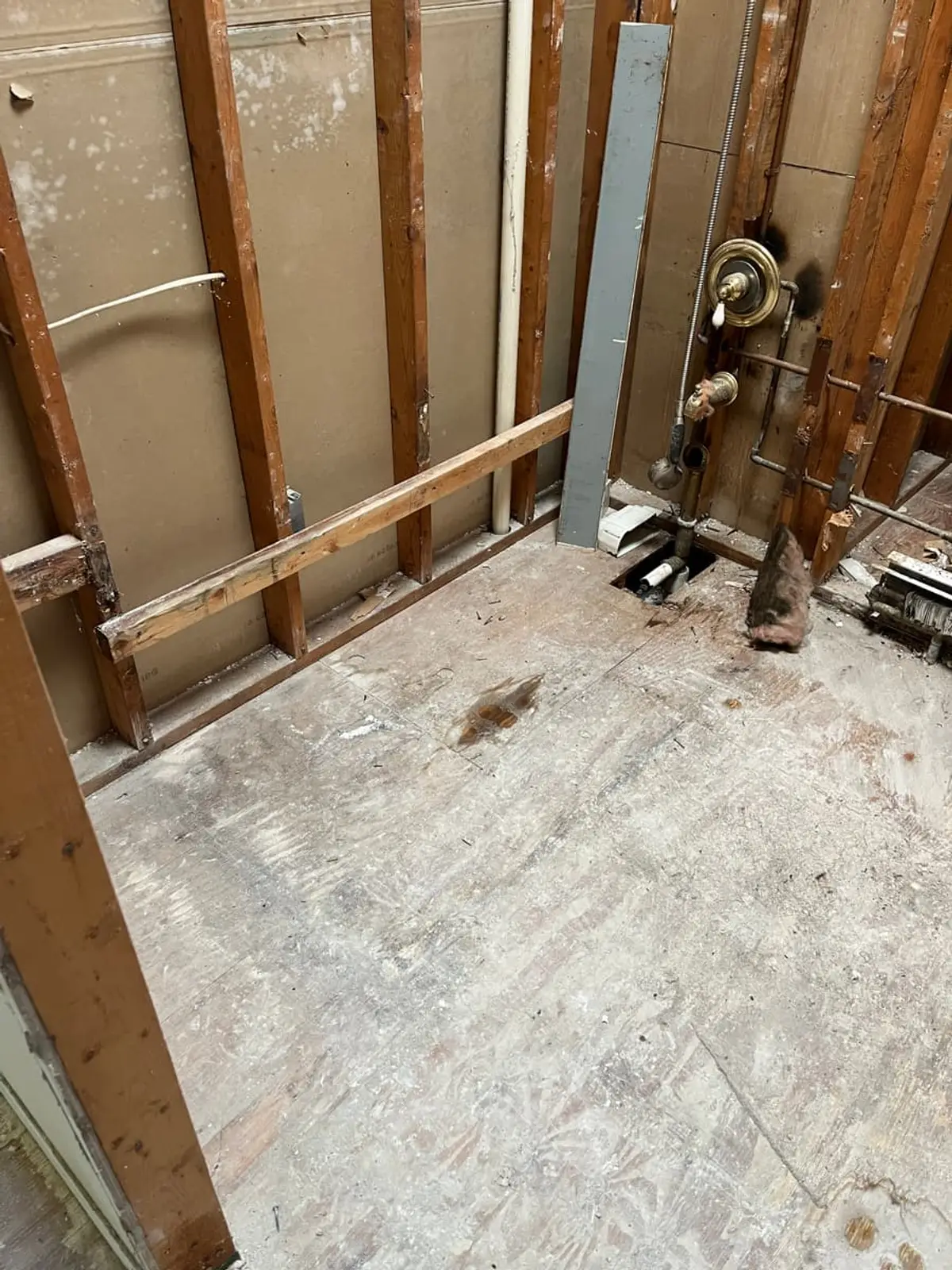
Who we call when the permit file is complicated
This is a paperwork problem more than a building problem, and paperwork problems reward people who have done them before.
An expeditor knows what the department wants and in what order. An architect can draw the as-built set. A surveyor can show where the structure actually sits. We have used all three across Nassau and Suffolk for years and we are glad to put you in touch, even if you decide to keep the Coram house and see the permit process through yourself.
What this looks like in Coram specifically
Coram is roughly 40,220 people in Suffolk County, ZIP 11727, and the housing stock is mostly hi-ranch, ranch, colonial. Around Route 112 and Middle Country Road, most of it is old enough that the mechanicals are on their second or third life. We know which of these streets take water, where the older systems fail first, and what the Longwood and Middle Country school district does to a resale price.
Prices are up 23.26% year over year as of 2026-05, which sounds like unambiguous good news and mostly is. What it hides is that a rising median is driven by renovated stock. A house that needs work does not ride that wave - it gets compared to the finished one down the street and marked down against it. At a $575,000 median, Coram is a market where buyers expect to do some work. That helps a seller with a dated house and hurts one with a genuinely broken one, because the pool that will take on a project is not the same pool that will take on a gut. The median house here goes under contract in about 38 days, which is quick for Long Island. It is also a figure that only applies to property in showable condition.
What a municipal search turns up about unpermitted work on a Coram house
The awkward part is how late it surfaces. Everything feels fine until a search comes back and the deck, the basement or the extra bathroom is not on file anywhere and no permit was ever pulled.
By then there is a signed contract, a mortgage commitment with conditions attached, and a buyer who has started packing. Renegotiation follows, then often a collapse, and a Coram house goes back on the market with more days on it and a story attached.
What your Coram building department wants before it issues a permit
Getting work approved after the fact is possible sometimes and impossible other times, and which one you are in turns on details nobody can judge from the outside. Setbacks, lot coverage, ceiling heights, egress, how current code differs from the code in force when it was built.
Your town's building department decides what can be permitted now, and an expeditor will know how that department tends to handle it. What we can tell you is that the process runs slower than a sale does, which is the practical problem.
What the two paths cost in Coram
These are the two routes open to you with a house with unpermitted work, priced against what Coram houses actually sell for.
Work it against Coram's own numbers. The median sale here is $575,000. A 5% commission on that is $28,750, and seller closing costs of about 2% add roughly $11,500. Those are costs we can cover on our side. That is $40,250 gone before anyone counts the repairs it took to get the house listable.
There are two waits in a listed sale and people usually only count the first. In Coram the median house takes about 38 days to go from listed to a signed contract. Then it waits again, typically 45 to 60 days, while the buyer's lender orders an appraisal and underwrites the loan. Call it 83 to 98 days from sign to keys, assuming nothing goes wrong.
The part worth understanding is what a signed contract actually guarantees, which is less than most sellers assume. A retail buyer with a mortgage contingency can walk away right up to the end. If they do not qualify, if the appraisal comes in under the price, if they change their mind and let the financing lapse. A share of deals die exactly there, after months of waiting, and the house goes back on the market with time on it. We are not borrowing anything, so there is no lender to satisfy, no appraisal to come in low and no contingency to exercise.
| Listing with an agent | Selling to us | |
|---|---|---|
| Sale price | $575,000 (Coram median) | Our written offer |
| Commission | −$28,750 | None |
| Seller closing costs | −$11,500 | We can cover them |
| Repairs before listing | Out of pocket | None |
| Cleanout | Yours | Ours |
| Showings | Until it sells | One visit |
| Listed to signed contract | 38 days (Coram median, once listable) | 24 hours to a written offer |
| Contract to closing | 45 to 60 days (waiting on the buyer's lender) | A date you choose |
| Total wait | 83 to 98 days if nothing falls through | Yours to set |
| Can the buyer walk? | Yes (mortgage contingency runs to the end) | No financing to fall through |
| Before repairs and carrying | $534,750 | The number we put in writing |
The listing column assumes a 5% commission and seller closing costs of about 2%. Both vary. We have not subtracted repairs or the cost of carrying the house while it sits, because those depend on the property. A house in good condition listed with a good agent can absolutely beat a cash offer, and we will say so if that is your situation.
Legalizing the unpermitted work first, or selling as-is
The comparison worth making is not our offer against an asking price. It is money in hand on a date you choose, set against a listed number minus commission, minus whatever the permit process costs, minus the concessions a buyer asks for once the file comes back, and minus several months of carrying a Coram house.
We will lay ours out in writing so it can be compared honestly. If the listing wins on that arithmetic, take the listing.
How we arrive at a number on a house with unpermitted work
On a house with unpermitted work we start from the end: what it sells for once the work is done. From that we take away the cost of the work and a margin for the chance that we have misjudged either one. That is the whole method. Nothing is hidden in it.
- What it is worth repaired. Not the Coram median of $575,000 on its own, but what houses like yours on your street actually closed at recently.
- What the work costs. Roof, boiler, electric, the kitchen and bath. In Coram the stock is largely hi-ranch and ranch, and on houses that age the mechanicals are usually the expensive part rather than the cosmetics.
- How long we will hold it. The median Coram house goes under contract in about 38 days once it is showable, then waits 45 to 60 days more on the buyer's lender. Ours has to get to showable first, and we carry taxes and insurance across the whole of it.
- What we are wrong about. Walls and floors hide things until they come up. We price for that uncertainty, and it accounts for much of the distance between a cash offer and a retail price.
How we can pay this and still make it work
Most cash buyers skip this part. We do not. We run millions of dollars of construction a year, so we buy materials at contractor prices and keep our crews busy all year. The same renovation costs us roughly half of what you would be quoted as a homeowner.
That difference is how we make money. It is also why renovating before you sell seldom comes out ahead: you would pay retail for the roof and the boiler and then hope a buyer pays you back for them. Most of the time they do not. Our margin comes from building for less, not from buying from you for less.
If our number does not work for you, tell us. We would much rather hear it than push. We will go through your situation and give you a straight view of your options, including the ones that leave us out. A lot of people do better listing with an agent, and if you are one of them we will tell you now rather than have you find out later.
What to do next
Nothing has to be legalized, opened up, drawn or approved before we buy. The unpermitted work stays exactly as it is through the closing, and the file becomes ours.
That is not a concession, it is simply the work we do. We take on the file, commission the drawings, meet the inspectors on site and pay for the corrective work when one of them asks for it. What would be a year of your life, spent on a house you have already decided to leave, is a line in our budget.
Common questions
Will unpermitted work stop a buyer getting a mortgage on a Coram house?
Frequently, yes, and it is the reason unpermitted work matters far more at sale than it ever did while you lived there. The loan is secured against the house as the town's records describe it, and an unpermitted addition is not in those records. Some Coram buyers get past it with a cooperative lender and a long timeline. Many do not. Selling for cash removes the question entirely.
Do I have to pull permits before selling my Coram house?
Not to sell to us. We buy with the work unpermitted and take the file on afterward. Whether you need them for any other purpose is worth putting to an attorney.
The previous owner did the unpermitted work. Does that change anything?
Not for us, and not for the town either, because the file follows the property rather than the person who built the addition. It is one of the most common versions of this we see.
Will the town find the unpermitted work when I sell my Coram house?
What the town knows and when is not something anyone should guess at. Your attorney can tell you what a sale in your situation actually triggers. From our side, nothing you disclose changes our offer.
There is already a violation for the unpermitted work. Can you still buy?
Yes, and it is a common starting point for these conversations. Tell us what the notice says and we will price it once rather than being vague now and revising on you later.
How much does unpermitted work take off the price of a Coram house?
It depends what it would take to legalize it and what the risk is that the town says no. A finished basement is usually a smaller adjustment than an addition sitting in a setback. We would rather price it accurately once than revise later.